Sort Smart, Save Big
Bringing an unsorted load to the Wylie Bay Waste Facility makes it difficult for recycling officers to identify materials and increases the risk that your load may be rejected.
Taking a few minutes to separate your waste can:
- Reduce disposal costs
- Increase recycling recovery
- Prevent dangerous battery fires, including those that have caused fires at the Wylie Bay Waste Facility as well as waste trucks nationally.
- Reduce landfill use
Sorting your waste helps protect the environment and saves you money.
Many items accepted at the facility can be recycled free of charge when correctly sorted. These include:
- cardboard,
- paper,
- glass,
- e‑waste,
- batteries,
- PET & HDPE plastics,
- steel,
- green waste,
- fluorescent & light globes,
- printer cartridges,
- clean fill,
- clean polystyrene.
How to Sort Your Waste
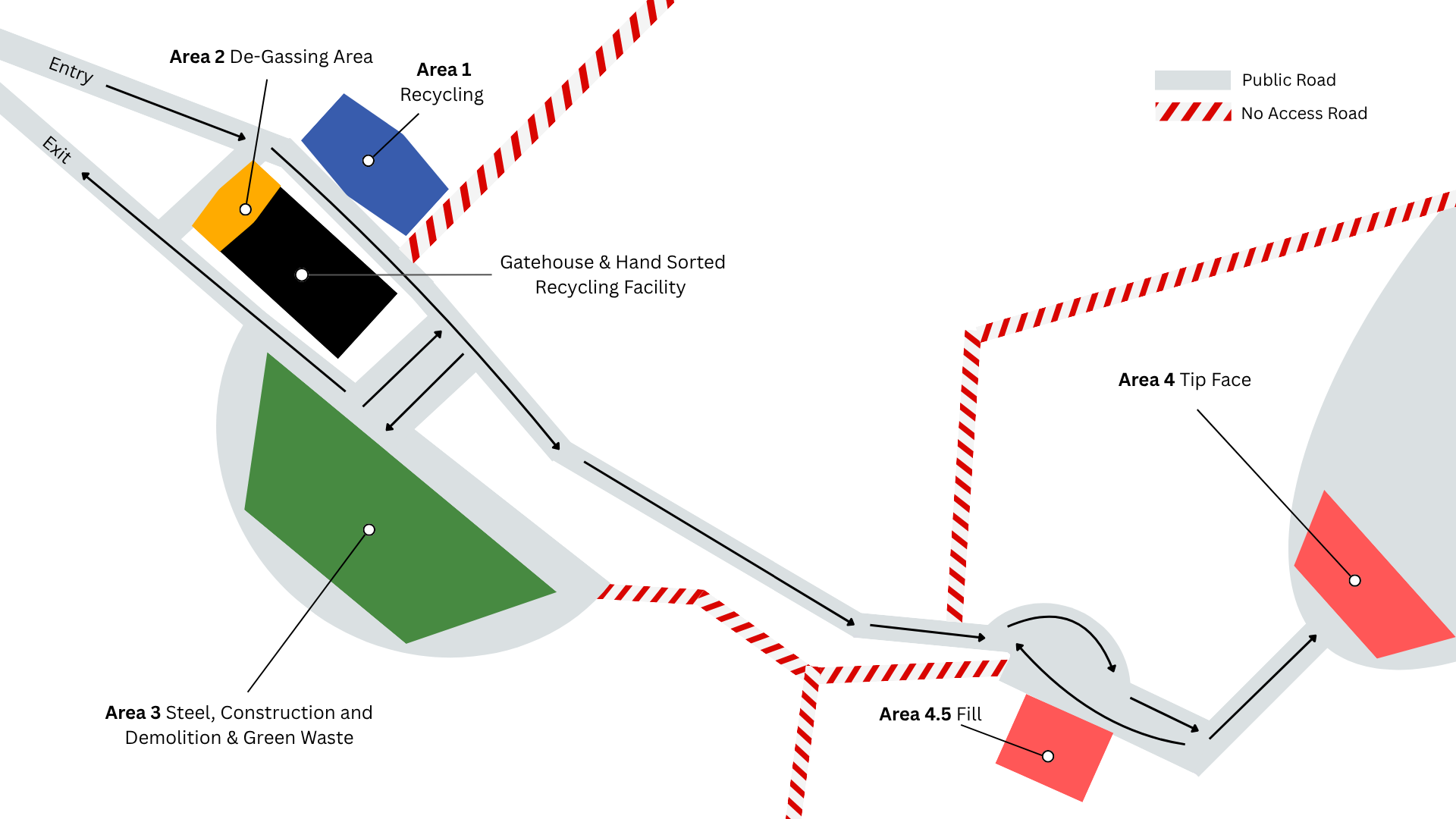
There are 5 public drop off areas at the Wylie Bay Waste Facility.
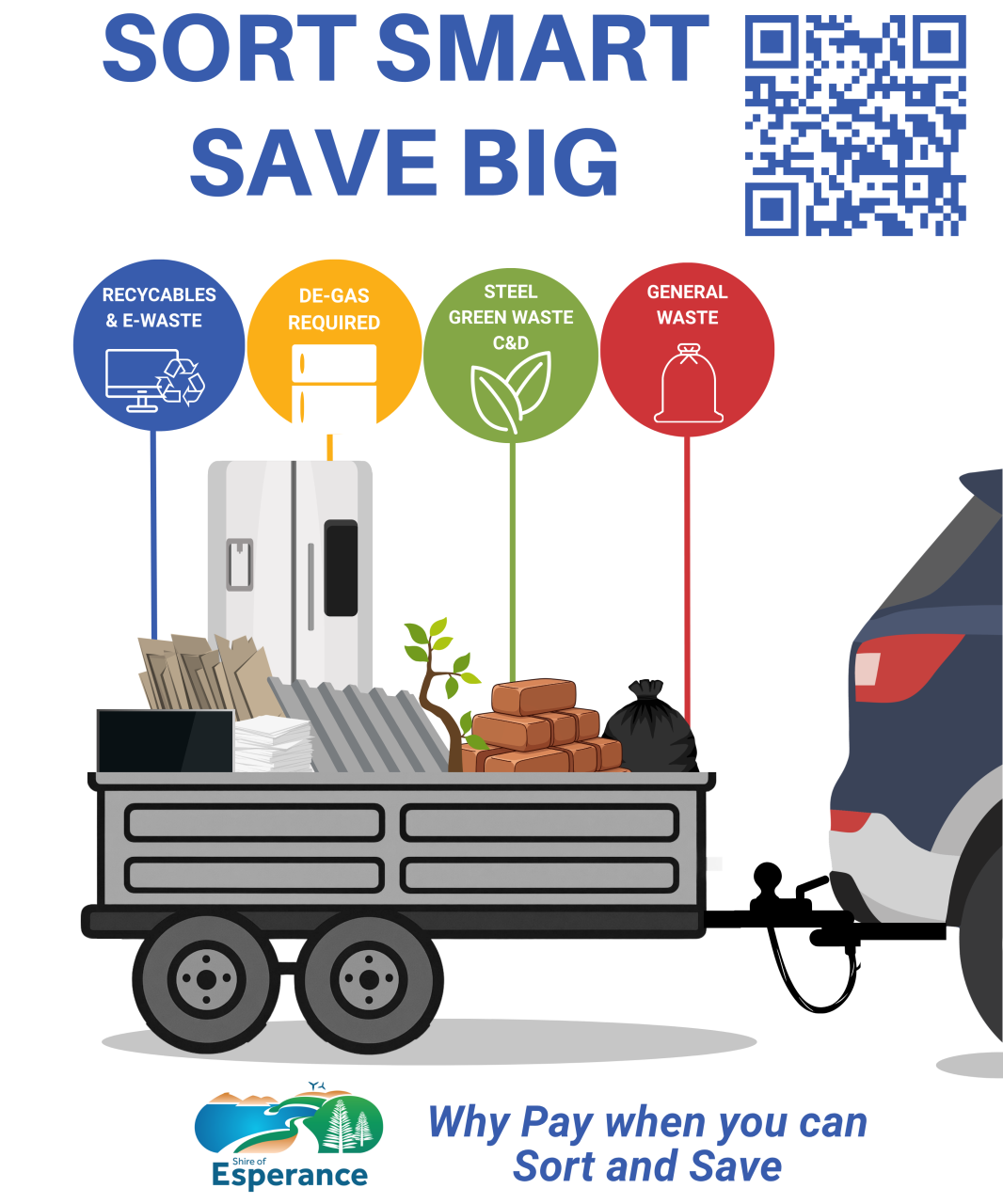
Recyclables (Area 1) | Whitegoods requiring de-gassing (Area 2) | Steel, Construction & Demolition, Green Waste (Area 3) | General Waste (Area 4) | Fill (Area 4.5)
Sorting your waste before arrival will make unloading faster and easier.
Loading tip:
When you load your trailer or ute - Load waste in the reverse order of drop‑off:
- General waste and Fill (Area 4/Area 4.5) at the bottom or back
- Steel, construction and demolition, and green waste (Area 3)
- White goods requiring de‑gassing (Area 2)
- Recyclables (Area 1) at the front or top
Area 1: Recycling
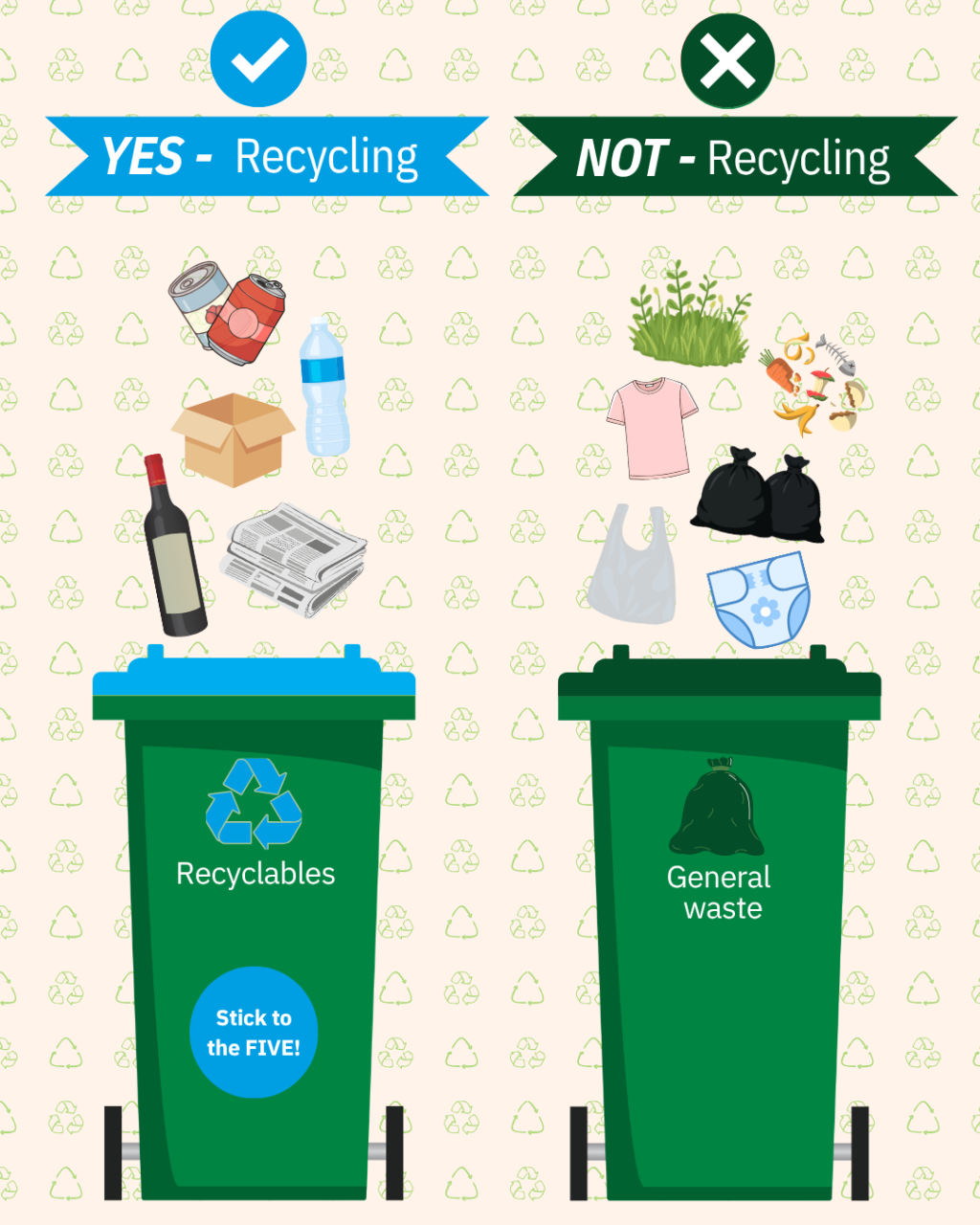
Includes items suitable for kerbside recycling and other recyclable materials:
- Cardboard
- Plastics (PET & HDPE)
- Aluminium cans
- Tins
- Glass
- Paper (glossy, newspaper, office white)
- Batteries (vehicle & household)
- Light globes and fluorescent lights
- Used oils i.e. Engine Oil & Cooking Oils (up to 40 litres)
- Clean Polystyrene
- E – Waste (Computers, TV’s, mobile phones, printers)
- This also includes Motorized tools & pumps, hairdryers.
Free for domestic quantities. Commercial quantities hold a fee.
Charges Apply for items that require further processing:
- Gas bottles
- Tyres
- Mattresses
- Any of the above items higher than the domestic quantity
Area 2: De Gassing Station
This area includes items that need to be de-gassed before they can be recycled as steel. Each Fridge/Freezer/Air conditioner that requires de-gassing costs $22.50.
- Fridges and Freezers
- Air conditioners
Area 3: Steel, Construction & Demolition and Green Waste
This area includes:
- Scrap Steel
- Washing machines
- Microwaves
- Ovens
- Stove tops
- Dryers
- Dishwashes
- Green waste
- Car/ Trailer body
- Concrete (Domestic quantities only)
- Bricks (Domestic quantities only)
- Tiles (Domestic quantities only)
Area 4: General Waste
This is the tip face, also known as the landfill. Drop off waste that cannot be recycled or separated
Area 4.5: Clean Fill
- Clean Fill (first 200 m³ free)
- Clean Fill refers to raw excavated natural material such as clay, gravel, sand, soil or rock fines.
- This material is required to be from areas that have not been subject to potentially contaminating land uses including industrial, commercial, mining or intensive agricultural activities.
- Additionally, the material cannot have been processed other than:
- Processing to achieve desired particle size distribution
- Processing to remove naturally occurring organic materials such as roots.
- Clean Fill must not contain any acid sulfate soil or other type of waste.
What Am I Saving?
When recyclable and recoverable materials are separated, less waste is charged at the tip face. This can significantly reduce your disposal fees, particularly for larger loads.
By recycling materials such as metals, green waste, cardboard, and e‑waste, you are also:
- Saving time at the gate with quicker, smoother unloading
- Reducing future waste costs by extending the life of the landfill
- Supporting local recycling programs and keeping valuable materials in use
- Improving site safety by safely managing batteries, oils, and hazardous items
- Protecting the local environment, including land, water, and wildlife
A few extra minutes of sorting can lead to lower costs, a safer facility, and a cleaner community; benefits that add up for everyone.
Helpful Resources
Don’t see something you can recycle at the tip? Check out Recycle Mate to see if you can recycle that item anywhere else!
FAQ's
Why do I need to sort my waste before coming to the Waste Facility?
Sorting your waste helps staff quickly identify recyclable materials and ensures your load can be accepted. Unsorted loads take longer to process and may be rejected if recyclable or hazardous items cannot be safely separated on site.
Does sorting my waste really save me money?
Yes. When recyclable and recoverable materials are sorted, they can be dropped off in free or lower‑cost areas instead of being charged as general waste. This can significantly reduce disposal fees, especially for trailer loads or clean‑ups.
What can I recycle for free at Wylie Bay Waste Facility?
Domestic quantities of many common items are accepted free of charge, including cardboard, paper, glass, e‑waste, batteries, PET & HDPE plastics, steel, green waste, fluorescent & light globes, printer cartridges, clean fill, polystyrene. See the Drop‑off Areas section for a full list. Additionally, please click here Wylie Bay Waste Facility » Shire of Esperance to find the full list of what quantities are free of charge.
What happens if I don't sort my load?
Unsorted loads may take longer to unload, may incur higher fees, or in some cases may be rejected. Sorting ahead of time helps ensure a smooth and cost‑effective visit.
What is considered a "domestic quantity"?
Domestic quantities are typical household amounts from residential use. Larger volumes or commercial quantities may attract charges. Please click here Wylie Bay Waste Facility » Shire of Esperance to find the full list of the Wylie Bay Waste Facility Gate Fees.
Why can't staff just sort the waste for me?
For safety and efficiency reasons, staff cannot manually sort mixed loads. Items like batteries, sharps, chemicals, and e‑waste pose risks if forgotten about and hidden inside your waste. Pre‑sorting helps protect staff and customers.
Why are batteries and e-waste treated separately?
Batteries and electronic waste is hazardous if crushed or damaged and may cause fires or environmental harm. 90% of fires at waste facilities and landfills are battery/e-waste related. Fires cause the waste facility to close, which causes a snowball effect on other services i.e. bin collections, businesses, renovations, builders etc. Separating these items allows them to be handled safely and recycled appropriately.
What if I'm not sure where an item goes?
Check out our website here: Wylie Bay Waste Facility » Shire of Esperance for information on what the facility accepts. You can also ask the friendly Wylie Bay Waste Facility staff on arrival. Additionally, use Find My Nearest - Recycle Right to see if an item can be recycled elsewhere.
Does sorting really make a difference to the environment?
Yes. Sorting reduces landfill use, recovers valuable materials, lowers pollution risks, and helps extend the life of the local landfill. Every properly sorted load contributes to a cleaner and more sustainable Esperance.
Will sorting take me extra time?
When we transition into the new Waste Management Facility in Myrup, there will no longer be a tip face. This means waste must be sorted before arriving, and unsorted loads will attract higher fees.
Sorting at home usually takes only a few extra minutes and helps make unloading at the facility quicker, easier and more efficient.
I only have a small load - do I still need to sort it?
Unsorted loads may take longer to unload, may incur higher fees, or in some cases may be rejected. Sorting ahead of time helps ensure a smooth and cost‑effective visit.