Keeping Our Community Safe from Sharps
Discarded needles and other sharps (syringes and lancets) can pose a real risk to community members, visitors, and workers. By understanding what sharps are, how to dispose of them safely, and what to do if you encounter one, we can all play a part in keeping Esperance safe, clean, and welcoming.
Safe Needle Disposal
Correct disposal of sharps helps protect community members, waste contractors, council staff, and emergency services from needlestick injuries.
How to Dispose of a Needle Safely
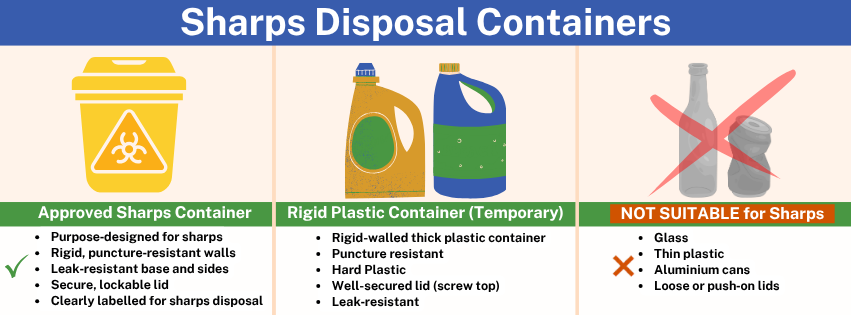
- Obtain a sharps disposal container or a puncture resistant, rigid plastic container (i.e. Liquid Laundry Bottle) with a screw top lid. *Avoid using glass or aluminium that can easily be squashed or shattered*
- Do not recap or bend the needle.
- Place the container on the ground next to the needle. Do not hold the container while placing the syringe inside.
- By the blunt end (away from the point), pick up the needle.
- Place the needle/syringe, point first into the container. *You can place multiple needles/syringes in a container but ensure the container does not overfill*
- Seal the sharps container or puncture resistant, rigid plastic container by taping the screw top lid.
- Put the sealed container in a rubbish bin (NOT recycling) or an approved sharps disposal location.
Children should never pick up a needle but should inform an adult if they find one.
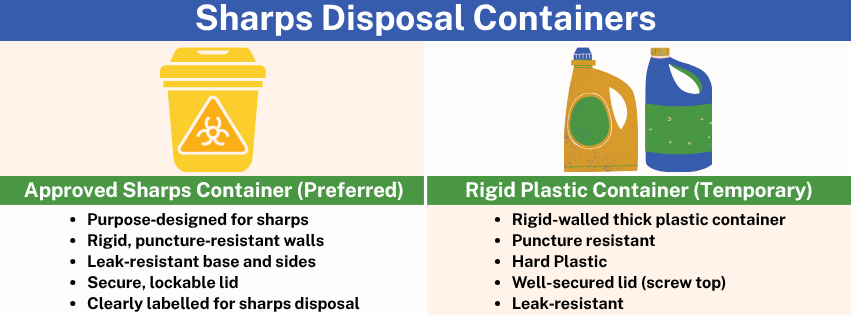
Don’t Have a Sharps Container?
If a proper sharps container is not available:
- Use a rigid, puncture-resistant container (e.g. a thick plastic bottle with a screw-top lid)
- Screw the lid on tightly and seal the lid with tape.
- Never place loose needles into household rubbish, recycling bins, or green waste bins.
I Found a Needle – What Should I Do?
If you find a needle or other sharp in a public or private space:
- Do not touch the sharp end with your hands.
- Keep children and pets away.
- Place it into a sharps container using tongs or a scoop.
- If you cannot safely remove it, contact the Shire of Esperance and Safe Spaces to report the needle’s location.
Treating Sharps or Needlestick Injuries
If a needlestick or sharps injury occurs:
- Encourage the wound to bleed gently – do not squeeze aggressively.
- Wash the area thoroughly with soap and running water.
- Apply antiseptic and cover with a clean dressing.
- Seek medical advice immediately, even if the injury seems minor.
- Report the injury if it occurred at work or in a public setting.
Prompt medical advice is important to reduce the risk of infection and to determine if follow‑up testing or treatment is required.
Safe Spaces Working Group
The Safe Spaces Working Group is a collaboration of local service providers and community members advocating for improved safe needle disposal options and education in Esperance.
The Working Group was formed in July 2025 after the Shire of Esperance, ESCARE Family and Community Service, and Hope Community Services came together to address increasing concerns raised through service provisions and community feedback. These discussions highlighted the significant and growing impact that the lack of safe needle disposal options was having across the community.
From the outset, a systems-based public health approach has guided the work. By operating as a true collaboration, the Safe Spaces Working Group has already achieved positive outcomes for Esperance, including:
- Development of a clear advocacy message: “The Esperance community needs safe needle disposal options.”
- Collection of local evidence and key facts, including lived experience stories from community members.
- Field work to better understand areas where unsafe needle disposal is occurring.
- Building community trust through visible advocacy actions such as Safe Spaces Community Clean Ups.
- Improved communication between local services involved in needle disposal.
- Ongoing local data collection to inform solutions.
- Identification of practical local solutions, including access to appropriate disposal containers.
- State-wide advocacy with government and not-for-profit organisations to improve services for Esperance.

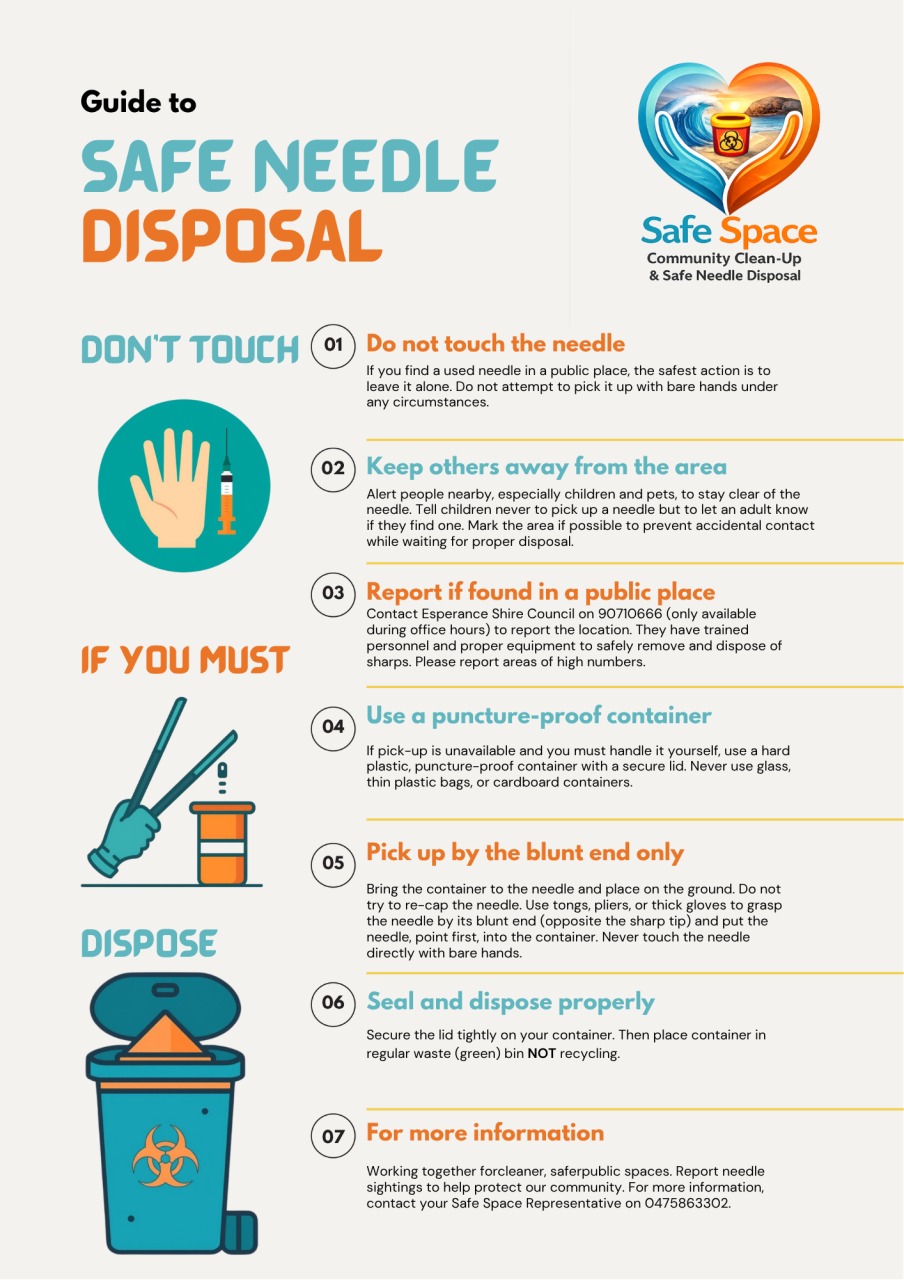
Click/Tap on the image to download.
Looking Ahead
Moving into 2026, the Safe Spaces Working Group continues to progress several community-led and service-driven public health strategies, including:
- Development of a local Needle and Syringe Program (NSP/NSEP) business case for submission to the Department of Health (Sexual Health & Blood-borne Virus team).
- Clear procedures for safe needle collection.
- Increased community education and awareness.
- Improved access to state-wide services such as WA Peer Harm Reduction and WAAC.
- Ongoing Safe Spaces Community Clean Ups.
- Creation of Safe Spaces disposal packs.
- Continued prioritisation of concerns raised by the local community.
Safe needle disposal is a long-term challenge in an ever‑changing landscape. Through collaboration, advocacy, and sustained effort, Safe Spaces is committed to ensuring that improvements made today continue to protect the Esperance community well into the future.
Responsibilities of Local Government
Local government plays a key role in:
- Public space maintenance and safety.
- Supporting community-led initiatives such as Safe Spaces.
- Coordinating clean-ups and responding to reports of discarded sharps.
- Advocating for improved health infrastructure and services.
Community Clean-Ups
Community clean-ups help reduce risk and build awareness.
- Safe Spaces Community Clean Ups focus on high‑risk areas and are supported by local services.
- Be a champion and Adopt a Spot through National clean-up initiatives. They provide resources and opportunities to get involved:
Further Information
Additional resources, photos, and educational materials (including Fitpacks) will be made available as Safe Spaces initiatives continue to expand.
If you have concerns or would like more information, please contact the Shire of Esperance, Escare or a participating local service.
📞(08) 9071 0666
✉️ shire@esperance.wa.gov.au
Escare
📞(08) 9071 3110
✉️ contact@escare.org.au
Frequently Asked Questions (FAQs)
What should I do if a child finds a needle?
Children should never pick up a needle but should inform an adult if they find one.
- Tell the child not to touch the needle/syringe
- Ensure the child keeps a safe distance from the sharp
- Notify an adult immediately
- Follow the procedure above on safe needle disposal here.
- If someone is pricked or scratched by the sharps:
- Wash the area immediately with soap and water
- Seek medical advice as soon as possible
- Inform a healthcare provider about the incident
- Report the location of the needle to the Shire of Esperance by calling (08) 9071 0666 during office hours (8:30AM – 4:45PM, Monday to Friday) or emailing shire@esperance.wa.gov.au.
What are sharps?
Sharps are objects that can pierce or cut the skin. This includes needles, syringes, lancets, scalpel blades, auto-injectors, infusion sets and some medical and veterinary devices.
What are sharps containers or sharps bins?
Sharps containers are approved, puncture‑resistant containers designed specifically for safe storage and disposal of sharps.
Where do community sharps come from?
Sharps in our community can come from many sources, including:
- People who inject drugs (including performance and image‑enhancing drugs).
- People managing medical conditions at home (e.g. insulin or blood glucose testing).
- Livestock and household pets requiring medical treatment.
- Skin penetration activities such as tattooing or cosmetic procedures.
We all share responsibility for ensuring sharps are disposed of safely.
What are the risks associated with discarded sharps?
Discarded sharps can cause injuries and carry a risk of infection, placing community members, children, pets, and workers at risk.
Can I dispose of my needles at home?
Sharps should never go into household rubbish or recycling bins without the protection of a sealed sharps container. They must be placed in an approved sharps container, once sealed they can be placed in a general waste bin.
Who is responsible for the safe disposal of sharps?
Anyone who generates sharps—at home, work, or in the community—is responsible for their safe storage and disposal.
Are there sharps containers located in public places?
You can download the HealthyWA ACE app or access the online map via your internet browser to locate nearby Public Sharps Disposal Units. When using either the app or the browser-based map, select the search function, tick the option for Public Sharps Disposal Units, and proceed to view available locations.
The Safe Spaces Working Group continues to advocate for improved access to public sharps disposal facilities across Esperance.
Why does the Department of Health run a Needle and Syringe Program (NSP)?
NSPs help reduce the spread of blood‑borne viruses, protect community safety, and encourage safe disposal of injecting equipment.
What are the barriers to safe sharps disposal?
Barriers can include limited access to disposal locations, stigma, lack of awareness, and distance from services. Guidance such as the NSW Community Sharps Guidance highlights the importance of accessible, well‑communicated disposal options.
How can I help reduce the risk of sharps in public places?
- Dispose of your own sharps correctly.
- Report discarded sharps.
- Participate in community clean‑ups.
- Support local advocacy efforts for safer disposal options.
What type of needles need to be disposed of safely?
All needles and sharps—regardless of size, purpose, or source—must be disposed of safely.