Museum Park History
Museum Park is a historic precinct on Dempster Street made up of various areas including the Market Village, the Sound Shell and the Goods Shed.
The park occupies the site of Esperance’s original railway marshalling yards, which once played a key role in the movement of goods and people through the town. The area is located close to the former town jetty at James Street, which was an important hub of transport and trade in Esperance’s early development.
Over time, the site has evolved from an industrial rail yard into a community and cultural precinct. Historic buildings from across Esperance have been relocated to Museum Park to preserve them and to create a shared space for heritage, events, visitor experiences and community use.
The Bonded Store and Goods Shed
Situated in the heart of town and overlooking Esperance Bay stands one of Esperance’s oldest and most recognisable buildings. With its simple timber frame and corrugated iron roof and walls, the former Bonded Store and Goods Shed has watched the town grow and change for well over a century.
The first section of the building, known as the Bonded Store, was completed by the end of 1895. A further extension, finished in 1898, became the Goods Shed. Today, these two parts of the building are between 127 and 130 years old.
Originally, the building played a vital role in Esperance’s early development. Using the Government Jetty located at the end of James Street (where the rock groyne stands today), it was the central hub for loading and unloading goods arriving by sea. Incoming and outgoing freight was stored here, while items such as alcohol and tobacco were held securely until duties were paid.
When the rail line connecting Esperance to the Goldfields opened in 1927, the surrounding area became the town’s rail yards and the building continued its important transport role. However, the opening of the modern Esperance Port in 1965 made the Goods Shed and Bonded Store obsolete.
Through the efforts of the Esperance Bay Historical Society and the Shire, the building was preserved and officially reopened to house the Esperance Museum in October 1976. Since then, it has continued to evolve ensuring this historic building remains a living part of Esperance’s story.
The Soundshell
Built in 1995, the Sound Shell is an open‑air performance and gathering space within Museum Park. It provides an accessible venue for live music, festivals, community events and public performances, supporting a wide range of cultural activities and celebrations.
The Sound Shell was opened to the public as part of Esperance’s centenary celebrations on 1 October 1995. Constructed with the support of local service groups and community organisers, it was created as an outdoor entertainment space for the community for shared experiences and public events.
The Market Village
Formerly known as the Museum Park Period Village, the Market Village has been renamed to better reflect the lively mix of local businesses and experiences found here today, and to align with the James Street Cultural Precinct.
Set within Museum Park and developed since 1975, the Market Village is made up of historic buildings that have been relocated to the site, to preserve Esperance’s heritage. Today, the buildings are home to local makers, creative studios, small businesses and visitor experiences creating a relaxed place to browse, meet locals and discover the cultural heart of Esperance.
The Market Village Buildings
Esperance’s first Visitor Centre opened in 1967 in a small section of Duncan Stewart’s store, now the IGA on Dempster Street.
As tourism in Esperance increased during the 1970s, a dedicated Visitor Centre was planned for what is now Museum Park. Using a subsidy from the Commonwealth and State Governments, providing employment opportunities for unemployed young people at the time, the purpose‑built building opened in 1984.
While the heritage style of the building matches the surrounding buildings in the Museum Village, it is by far the youngest building in the complex.
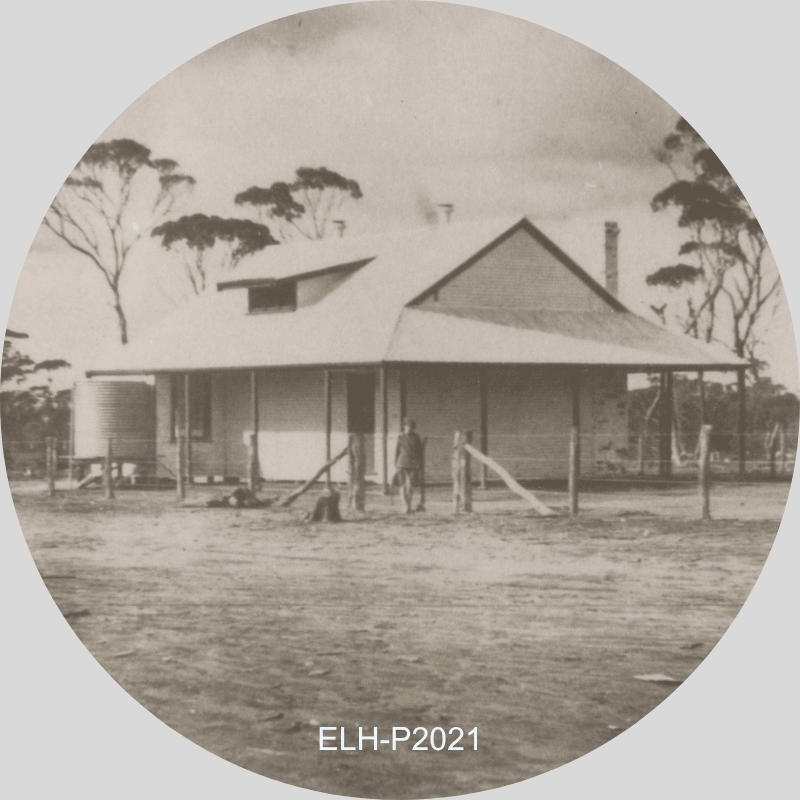
The old Salmon Gums School was originally built as a school room at the Princess Royal Mine, 10 kilometres north of Norseman, in 1906. When enrolments in the school at the mine site declined, the school was moved to the primary school site in Norseman.
In 1926, the first school in Salmon Gums was opened in the Salmon Gums Agricultural Hall, with head teacher Miss Jessie Nairn appointed. As the Hall was used for other district social functions, the classroom frequently had to be packed up.
In 1927, the district inspector of schools recommended that another building be sought. The decision was made to bring an unused school building from Norseman to Salmon Gums. The contract to move the school was awarded to Eustace Pike of Kalgoorlie. The building was partially dismantled, then moved by Model T truck and by the recently completed Norseman to Salmon Gums rail service. Even the brick fireplace was dismantled and rebuilt.
The school eventually outgrew the building, and a new complex was opened in 1972, with the old building scheduled for demolition. The headmaster, Bart Northam, intervened, and the well-travelled school building was transported to where it now stands in the Museum Village.
The Village Sheep Shop operated out of the building for 33 years until the business closed in 2018. The building is now home to Esperance Community Arts.
After gold was discovered in Kalgoorlie in 1893, Esperance, as the closest port, experienced a huge population boom. In 1895, the first hospital (which also served as the magistrate’s office) was opened.
After a decline in the town’s population, the hospital closed in 1909 and was only used occasionally for emergencies. In 1926, a to secure a hospital for Esperance. A hospital building was purchased from Wellard, in Kwinana, where the hospital was to be closed due to the declining population in the area.
In 1929, the Wellard hospital was transported to Esperance by sea, on the SS Kybra. The contract for moving the hospital was awarded to GJ Fairbanks, who was paid £2,495 for the job.
One of the buildings of the hospital was the Matron’s House, used as a residence for hospital matrons up until 1971. After that time, the building was used for a physiotherapy clinic and pathology department.
When the present-day hospital was opened in 1960, and later expanded, the old Wellard buildings were used less frequently.
In 1983, the Matron’s House was moved to the Museum Village, where it has been used by a variety of different small businesses over the years.
In 1987, the main hospital building was relocated to Taylor Street, and in 1989, it became the Taylor Street Tea Rooms. Now the Taylor Street Quarters, it is a mainstay of the Esperance restaurant scene and a local icon.
| Police Sergeant's Quarters |
Esperance’s first Police Station was opened in 1879, and Constable George Truslove and Lance Corporal Walter Coppin were the first police officers appointed to the area. Their jurisdiction ran from Bremer Bay to Eucla.
The original police station and quarters built for the police officers assigned to Esperance fell into disrepair, and by 1925, it had become uninhabitable. The Kalgoorlie Miner reported that, ‘at present, the constable has to reside almost a mile from the centre of the town, and from his headquarters – the courthouse. Fortunately, the residents and visitors to Esperance are very law-abiding.’ This state of affairs was seen as entirely unsuitable, so plans were made to replace the police station.
In 1926, the Police Sergeant’s Quarters was built, along with a new lockup and stables, by FJ Barrett, at a total cost of 1,760 pounds. This building was in use until 1986, when a new sergeant’s house was built, and the old Police Sergeant’s Quarters was moved to the Museum Village.
Built in 1940 on the corner of Hicks and Dempster Streets, this building was used to house the Esperance High School headmasters up until 1961.
One of the headmasters who lived in the building was John Rintoul, the local historian who wrote Esperance, Yesterday and Today.
Later, the building was purchased by the Esperance Shire Council and used to house Shire employees.
In 1978, the building became the site of Esperance’s first Senior Citizens Centre. The current Senior Citizens Centre was opened in 1983.
The Old Schoolmaster’s Residence was then moved the short distance across Dempster Street to the Museum Village.
In 1984, it was opened as the Banksia Tearooms. Since that time, it has housed a number of cafes and restaurants and is now home to the very popular Bistro Louis.
Sinclair House was originally located on William Street and was a part of an eight-room house, the home of Billy Gibson, who discovered the Gibson Soak.
After Billy Gibson died in 1918, the house was sold, and as it was too large for the new owner, a section of it was sold to Les Sinclair. Les moved the house using a jinker – a heavy, horse drawn cart – to a location on Dempster Street.
Les was the son of Laurence Sinclair, who first came to Esperance in the 1870s, working for Andrew Dempster as a shepherd, and later was one of the men who discovered gold in Norseman.
Laurence’s wife, Julia, was known as the town’s first midwife. Les, one of Laurence and Julia’s nine children, lived in the house with his sister Ethel and her husband Roy Jones.
In 1980, after Ethel and her husband had died, their son gave the house to the Esperance township and it was moved to the Museum Village. It is now home to the business ESP.
The Wesleyan Methodist Church was originally built in 1897 on Lot 82 Dempster Street, where the Fenwick Cinema is now located. Costing only 94 pounds, the building was opened in 1897 with a large congregation present. Before this, Methodist Church Services were held in a rented school room.
The first resident minister was Reverend SJ Rooney, who later became a missionary to the Solomon Islands. After Rooney, there was no Methodist Minster in town, and the church relied on ‘missionaries’ who were stationed in Norseman. These ministers travelled by sulky or by bicycle between Norseman and Esperance, 200 kilometres of sandy, boggy track. Later, they travelled by motorbike, or on the weekly mail truck.
The circuit ministers worked hard and had a large area to cover. One of them, William Colenso, died in 1934 while acting as a minister in the district. His death certificate states the cause of death as malnutrition. Another Minister, Reverend Robert Boulter, had to ask the Synod for a special dispensation to pay for a motorbike to travel the district in 1934. He reported difficulties with the mud near Salmon Gums which would completely clog up the wheels of his motorbike, leaving him to resort to waiting for the train.
When the town’s population dwindled, regular Sunday services in the building stopped for a time, in about 1904. In 1912, after a dispute over ownership of land, the church was moved down Dempster Street, then in the 1920s, the building was moved to yet another site on Dempster Street.
The Methodist ‘Home Mission Department’ decided to dismantle the church and move it to Ravensthorpe. The congregants managed to stop this move, reportedly by standing on the porch and refusing to move.
In the 1960s, the town’s population was increasing, so a permanent minister was assigned to the town. Then in 1970, a new church building was built, and the old Church was moved to the Museum Village in 1979.
In 1896, with Esperance rapidly expanding and a typhoid outbreak in town, the town urgently needed a hospital. The original Hospital was built on the corner of Hicks and Windich Street, near the site of the present-day Hospital. The hospital had four rooms - the nurse’s room, servant’s room, ward, and a kitchen/bathroom. The hallway was so narrow that patients sometimes had to be passed through the windows to get into the ward.
The hospital was closed in 1909 when the town’s population dwindled to the point where a hospital was no longer warranted.
The building was purchased by Mr Baird for £77 in 1929, and was relocated to William Street, where it was used as a BnB for some time.
In 2009, the building was relocated again, to its present site in the Museum Village.
This building was built in 1895 by Sam Lord in Andrew Street, opposite the Post Office. The shop was originally owned by Walter Egbert Elston, and was named Elston’s Stationery and Novelty Bazaar. Along with stationery, Elston sold items such as Christmas cards, toys, and draperies, as well as local photographs that he had taken himself.
When the town declined in the years following the gold rush boom, Elston was forced to close his shop and leave town. Later on, the building housed a general store and a bicycle agency. It was run by several different people, finally being taken over by Mr Binnie, who supplied patent medicines, gifts, books, and fishing gear.
In the 1950s, JE Stewart took over the shop, becoming the first qualified pharmacist in the town. In 1955, a pharmacist from Kalgoorlie called Bert Elliot took over the store; he stocked general goods as well as operating a pharmaceutical dispensary.
In 1962, Len Barker took over from Mr Elliot. Mr Barker opened another chemist shop, which was also located in Andrew Street. In 1970, Mr Keirath took over the two chemist shops, and operated them until the late 1970s, when he moved into a larger premises. In 1978, the little Chemist Shop was moved to the Museum Village.
This building, built around 1907 and owned by the Daw family, was originally located in the townsite of Kundip, near Ravensthorpe. The building was then moved to Red Lake, north of Grass Patch, in 1926.
The building was relocated to Esperance when the Daws moved their business to Norseman in the 1940s. It was situated on Andrew Street and used as an office.
Doctor Tom Burcher later used the building as a surgery when he arrived in town in 1966 to relieve the town’s sole doctor, Dr John Fenwick. Burcher stayed in town, as the town’s population was increasing dramatically, practicing in this building until 1973.
After that, the building was not used again until it was moved to the Museum Village.
Built in Andrew Street in 1896, this building was originally the offices of the Esperance Municipal Council. When the council moved into new offices in 1898, into what is now called the Esperance RSL Building, the original Municipal Offices became the local Court House.
In 1967, a new Court House was built, and after nearly seventy years of use, the Old Court House stood vacant. In 1975, the service clubs of Esperance got together to move the heritage building to its present location.
It became the first building of what would develop into the ‘Museum Village’.